

I haven’t posted here for quite some time, and there is a reason: life has changed a lot over the past six to twelve months, and most of that is AI. So this is a status update rather than an essay: what changed in how I write code, how my company writes code, how I do research, how I deal with accountants and paperwork, how I read papers, and what all of it did to my calendar. Programmers and ML people first, since those are my favourite.
The threshold
I’ve been saying for a long time that AI would come for programmers. Here is me saying it in March 2017, in Forbes: Machines instead of engineers: why AI will come for programmers too. Back then every list of professions about to be automated, Musk’s included, had drivers, call-centre staff, salespeople and lawyers on it, and almost never the people actually building the automation: programmers, ML engineers, data scientists. They looked like the elite of the tech world, exempt by construction. My argument was the opposite. Data scientists would go first, because data preparation and hyperparameter tuning were already being automated and learning-to-learn was producing architectures as good as human-designed ones; programmers next, starting with the boring parts, integrations, CRUD screens and template sites, because IT is AI’s native environment in a way the physical world is not. It was an unpopular opinion. It also happened, give or take a few years on the timeline. (The article’s example of a tedious integration nobody should be doing by hand was wiring a translation API into your app. Not a coincidence: that was the problem my then-new company was built around.)
The article is in Russian. In 2017 that would have been a problem for you; in 2026 translation is a solved problem. If it isn’t solved yet inside your company, that is literally what we do at Intento: production-grade translation and quality workflows for 60+ enterprises across hundreds of language pairs, and an annual State of Translation Automation report that benchmarks 57 models from 37 vendors across 100 languages so you don’t have to. Yes, that was an ad. Back to the post.

I also kept trying to make models write code for me, from the very first versions where that made any sense (copy-pasting snippets from ChatGPT doesn’t count, although even that quietly replaced StackOverflow for a lot of people). Nothing finished came out of it for a long time. The first complete projects started working for me around the turn of 2024–25 — and I suspect that is the moment the models crossed the threshold, not the moment I got brave.
So in January 2025, for a course project on interpretability on an AI Safety course (write-up), I decided not to write the code by hand and did it all through Gemini and Claude. They assembled the transformer, the interventions and the activation visualisations; I only fixed small things.

In the spring of 2025 I wrote an MCP server for translation via Intento. It was a locally run server with stdio transport, as most MCP servers were at the time. There I decided, on principle, not to write a single line by hand; I used Cursor and, I think, some Codex or Claude.
By December 2025 I had rebuilt it on Streamable HTTP as a proper production web service (a customer had asked). As usual, the production part turned out much bigger than the new transport itself: logging, monitoring, security, load, error handling, deployment and so on added more code than everything else. I picked up speckit along the way and liked it; for greenfield it worked great. That was Cursor and Codex. I still develop the service (and no longer alone), mostly in Claude Code these days, without speckit itself but with the habits that settled in that repo: readable specs with a decomposition, tests before implementation, ADRs for the decisions.
In parallel, through 2025, I made several attempts to point models at our platform code at Intento, the first version of which I wrote by hand ten years ago. The platform has evolved a lot since; there is plenty of code I never wrote or even read (though some of mine is still in the core, still working). With that kind of brownfield the models did badly. They lacked understanding, knew little about the dependencies between services and repos, and on small bug fixes and features did the wrong thing. People who lived in that code day to day could tame them by feeding in all the context; for an outsider who doesn’t live in the repo it was sad. I blamed brownfield as such. As it turned out later, it wasn’t brownfield: the context lived in people’s heads, not anywhere a model could reach. More on that below.
In March 2026 my son and I built a full browser game, Grumbulus: you play a storm cloud attacking a city. About 15,000 lines of vanilla JavaScript in roughly two evenings, with Claude writing every line, creating procedural music and drawing the art, and me playing, saying what’s wrong and repeating, in two-to-five-minute cycles. “Say what’s wrong, not how to fix it” is still the best prompting advice I have.

In April 2026 I wrote a paper on my long-time favourite, the universal transformer (these days also known as the looped transformer), with memory (another old favourite). Here I not only had models write the code inside Antigravity but ran the experiments from there on TPUs in GCP. I didn’t touch the agent mode then; I ran parallel terminals, which is still my favourite way of working, now in the Claude Code CLI (the new Antigravity, where the terminals and the code are hidden somewhere far away, hasn’t grown on me yet). What I actually did was generate ideas, pick the ones worth implementing, review plans and results, and correct course.

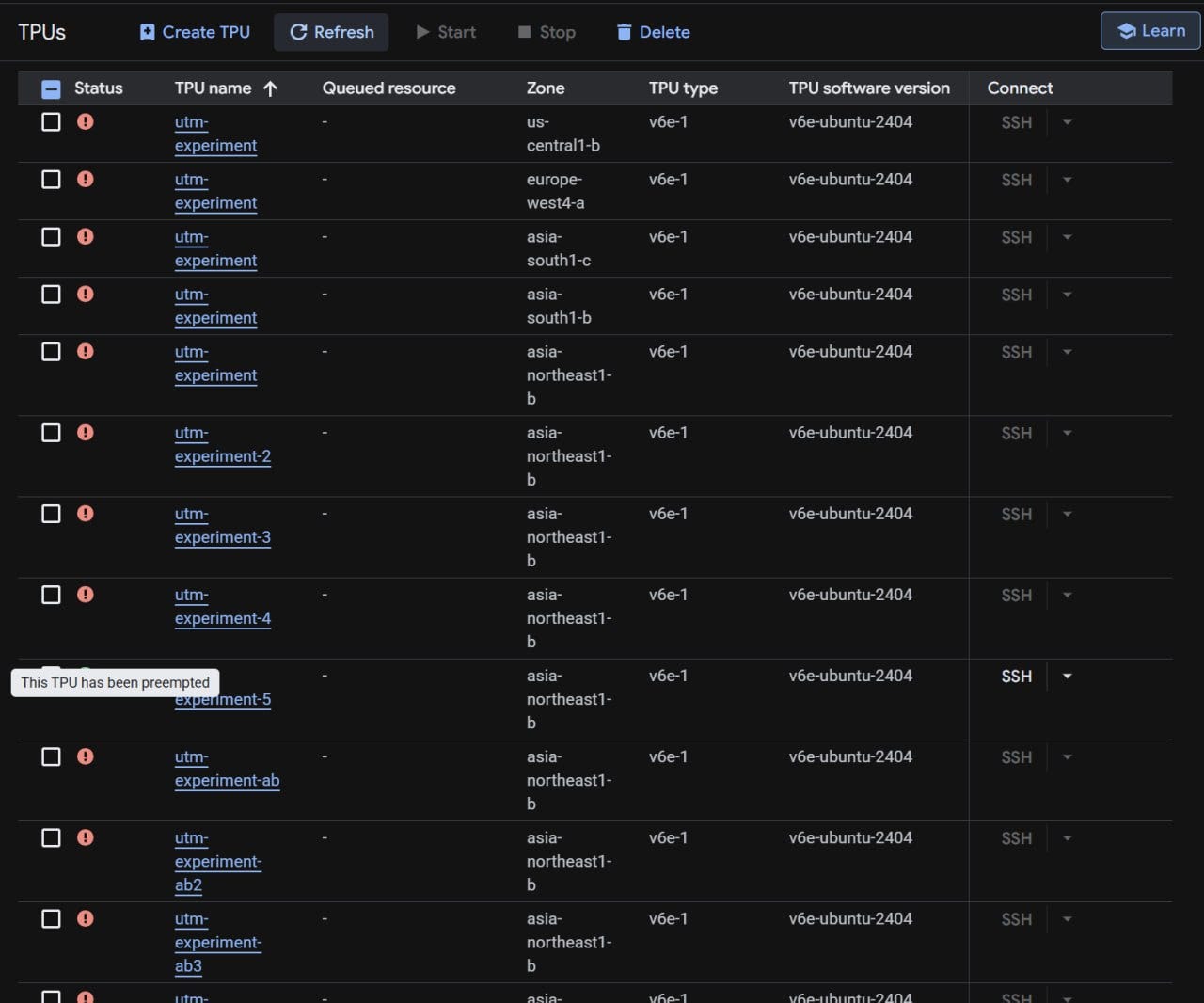
The real bottleneck was outside all of that: getting TPUs allocated. They were almost totally booked, especially the newer generations.
The last six months
That is the part that matters.
Six months ago a very noticeable, probably the larger, part of our code at Intento was written by hand. Now models write it. People hand out tasks and review the output (specs, plans, tests, code), and nobody types code by hand any more. At all.
To get there we had to do serious work on foundations (not finished yet): make every artifact a model might need reachable and every system queryable. Docs, in the repos and via MCP to Confluence. Standards and ADRs, in the repos. Tasks, first in JIRA, then in Linear. Production logs, over MCP. And, when needed, the Slack history. It is exactly the list a new human developer needs when joining a project, and exactly what the models were missing a year ago when I was busy blaming brownfield.
Like everyone else’s, our bottleneck moved. Writing code isn’t one any more. Reading and review are: the first pass is done by agents too, but the final read is still human, and that is what’s creaking now. Everyone runs several agent sessions at once; while one agent writes or checks something, you read the fresh wall of text from another. One loop after another inside the big engineering loop closes on agents (besides writing code: code review, documentation, release notes, tests, bug fixing, investigations, ...), and the big loop itself is becoming an autonomous process that a human enters only at specific points, where a quality gate wants an approval to move on; on some experimental repos it already runs that way. We’re continuing this, together with turning the whole company AI-first. That is a separate story, and probably a separate blog: we’re starting an Intento engineering one soon.
Language shopping
Next year there will be more end-to-end autonomy and less human control, and developers will move up the value chain. Everyone and their dog has written that, so I won’t. What’s more interesting is what opened up along the way. For instance, language shopping: you can now pick a language for the task rather than for what the team happens to know.
We’ve started experimenting with Rust. In the old hand-coding paradigm we didn’t even dream about it; at best we hoped to redo something in Go one day. The first candidate was an auxiliary service: an emulator of real provider APIs with all their possible misbehaviours, which our performance tests kept running into. We rewrote it in Rust (and in Go and Node too, with a parity test across all four implementations, so there would be something to compare against). In the same 100 MiB pod the Rust version holds 2.6 times as many open connections as the Python original (about 8,900 against 3,400) and idles at 1 MiB instead of 33. Along the way it dropped hyper for its own 400-line HTTP/1.1 layer with wire tests. The numbers are from a local rig, but the order is clear. Curiously, Go came out barely better than our old Python: 11%, and only after swapping net/http for fasthttp; on stock net/http it was twice as bad. There is probably room to improve, but in the manual paradigm nobody would have given this a week for an auxiliary service.
Not only code
I have accountants who keep the books for one of my companies. Every year at filing time I sit down to re-check what they’ve prepared, and almost every year I find mistakes, some of them silly. This year Claude did it instead of me, and went beyond the filing: it found things I’d never thought to challenge, with references to specific laws, interpretations and guidance (I checked the references; they held). Then it found a wrong calculation from last year that I had missed and that had cost me extra tax. Then a lost refund from the tax office for this year (which I might have found myself, just not that fast). All of it in one evening. So the quality gate moved: I used to check the accountants; now Claude checks them and me. Next year, at this rate, the loop closes without them. Claude has paid for its subscription many times over. The accountants, I’m not sure.
Routine correspondence with various organisations I’ve long been handing to Claude or GPT, and it is so effective in terms of time (and there is zero joy in that process by design) that I can’t imagine going back. Technically nothing stops me from closing that loop completely. Only natural caution, and a wish to keep the quality gates with me for now.
Mathematicians have it sharper
Lex Fridman recently put out an emergency episode on AI and mathematics, with Ankur Moitra (MIT, visiting IAS), Steven Brunton (University of Washington) and Alex Kontorovich (Rutgers). Three hours plus, as usual. No point retelling it: how mathematics is changing because of AI, the future of mathematicians, the big problems (Riemann, Navier–Stokes, P vs NP, Unique Games), machine-checked proofs. I had somehow never thought of the zeta function as signal processing where the signal is the distribution of primes. Worth a listen, and there is even something to look at.
Mathematics is worth watching closely as a very expressive model case of a profession changing. My impression is that it is happening more sharply for mathematicians than for programmers, although for programmers it started earlier, and so far without an existential crisis. Software engineering has its own fears, mostly about layoffs (fresh example: Microsoft offering voluntary exit packages to about 60,000 people, roughly 27% of its workforce), but on the surface it looks calmer, and everyone is adapting fast. Among the mathematicians I’ve watched over the past six months, including some at a very high level, panic is more common. How the field changes, what the people in it will do, what happens to the education system, and how society and industry respond in turn: all open questions, and mathematics will probably answer them first.
Papers, and the arXiv problem
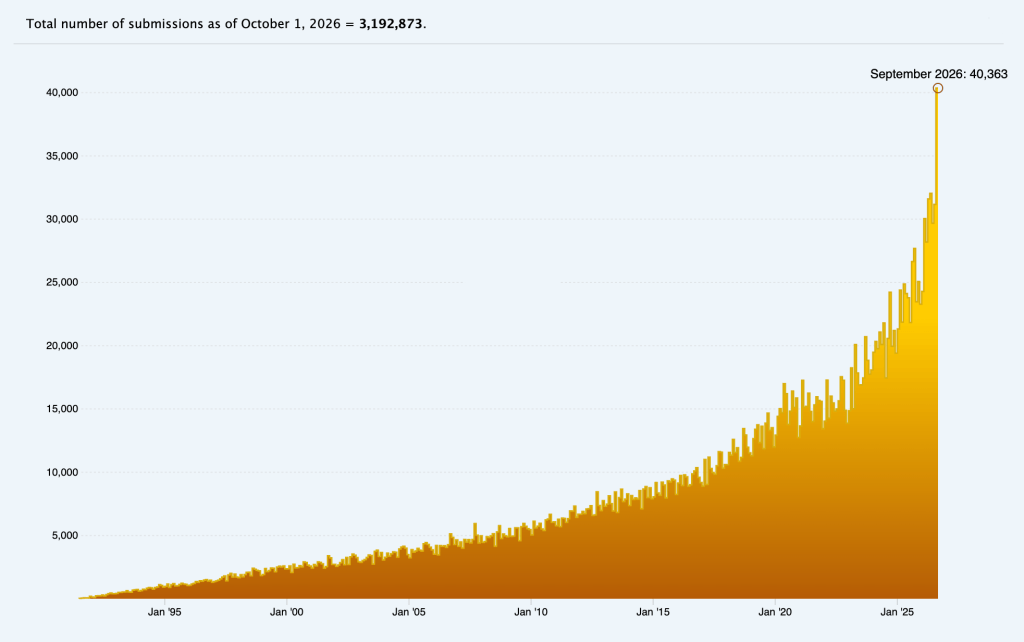
Paper reviews you know about. That process is still fun (so is writing code, by the way: I’ve always liked it and will probably still learn a few new languages, both programming and natural ones, even though in practice it is no longer needed). But the volume of papers being shipped, and now also generated, has grown so much that doing it by hand is no longer viable. arXiv has noticed too: since 1 October it limits authors to two submissions per calendar month, after submissions doubled in two years to over 40,000 in September. Rate limits for graphomaniacs 😁
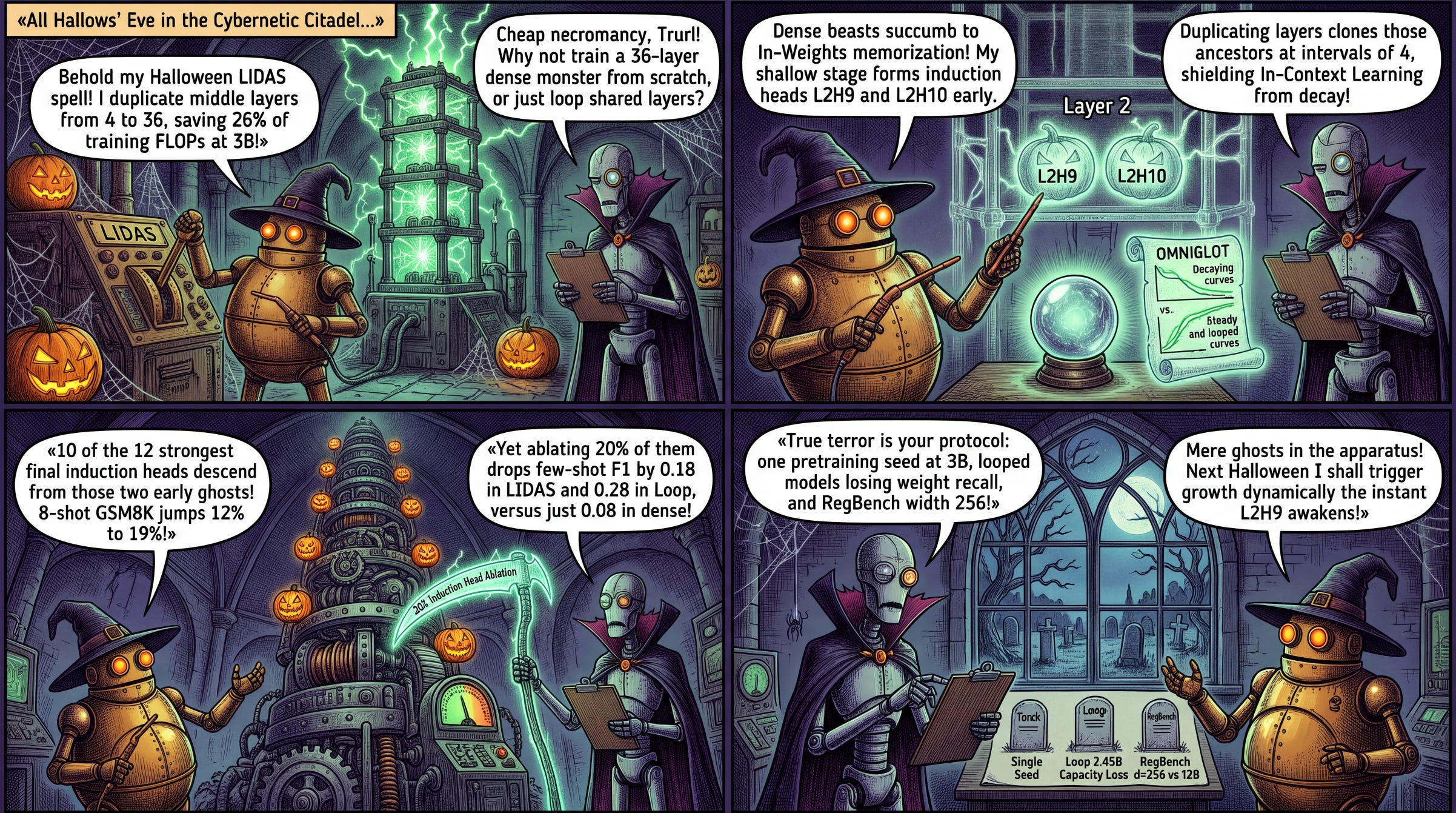
That is why, a year and a half ago, I started a second blog next to this one: ArxivIQ, hand-picked papers with AI-written deep dives. The split is simple. GonzoML stays the place for the paradigm-shifting or unusually odd papers, read and written up by me, and for other posts like this one. ArxivIQ casts a broader net over the solid papers I would never get to by hand. The pipeline started as three agents (one extracting the technical details, one a professional skeptic hunting for methodological holes, one synthesising the review). A year on it is a small factory, with better models underneath at every step. The review arrives with the paper’s own figures placed where the text discusses them, and with every arXiv citation checked before anyone sees it. A roast, at three intensities, searches the web while it reads, so “this was done in 2019 and they don’t cite it” is a receipt, not a hunch; a second review then takes in the roast’s findings that hold up. Other agents trace the paper’s lineage to the authors’ earlier work and to papers I’ve already reviewed, draw a cover image and a comic (script first, then pictures), translate, and prepare the posts for X. You can see what that looks like on my X feed.
I still read every piece before it goes out, though these days mostly because I’m interested in the paper, not because the pipeline needs me: I haven’t had to fix a mistake in quite a while. Older setups would occasionally invent a formalism the paper never had; the current one doesn’t. And that isn’t only the models getting better: the harness around them grew up too, with the fact-checking passes, the link checks against arXiv and the critique-and-refine loops, so a slip that does happen gets caught before it reaches you. If anything, it is the other way round: the agents find related papers the authors didn’t cite and point out what the paper itself lacks. I like how it works, and it makes me ten times more efficient at understanding the field while keeping the technical depth. Hopefully not only me.
A different economics of research
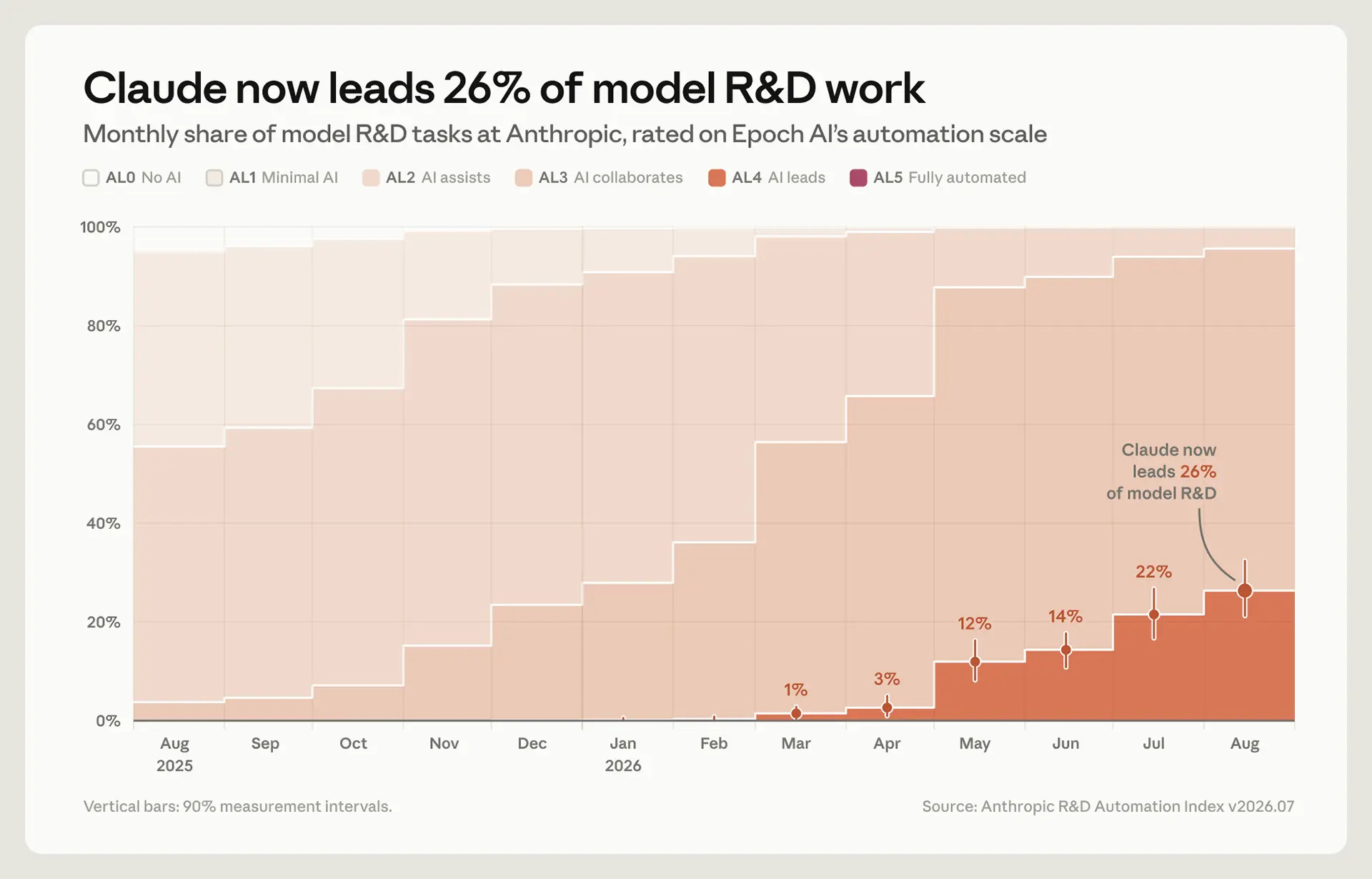
Research ideas come to me all the time; the problem was never the ideas. A couple of weekends ago I took one of them to Claude, and over one evening we sketched a plan and the experiment code; the next day I ran everything, got the first result (negative) and understood that the idea apparently doesn’t work. Great that I understood it quickly. In a previous life I would have spent months of evenings and weekends writing that code, and finding out at the end that it doesn’t work would have hurt a lot more. The universal transformer paper from April was already done this way, ideas, picks, reviews and course corrections on my side and all the code and the experiment runs on the models’ side, and it already felt like a different job. (Anthropic’s own numbers point the same way: by their count, as of August Claude “leads” 26% of their model R&D work, up from under 1% in February, and over 90% of it is done in collaboration with Claude.) It has never been possible to iterate this fast: a negative result in a day instead of a quarter is simply a different economics of research.
For me the moment resembles fifteen years ago, when MOOCs arrived (I built myself a whole personal master’s programme out of them: 113 courses, from virology to discrete optimisation) and it turned out, instantly, that for those who know how to learn the efficiency of learning had gone up by an order of magnitude. The same feeling now, only not from learning but from everything at once. (Learning, by the way, went up another order of magnitude: you can now think out loud at an agent and get a personal tutor back.)
This isn’t abstract for us. This year we took our eldest son into home education, and we’re now finding our way around a field that is completely new to us. At the same time, I feel standard schools are getting more and more outdated: a personal tutor for every child used to be a luxury, and it no longer is. Another separate story.
Where the human stays
What life looks like next year, I don’t know. What I am sure of: many jobs will transform beyond recognition, and the human in them stays at the task-setting end (when the task is new), at the quality gates, and wherever they simply like being (as long as the business doesn’t suffer 🤭). The main question of next year seems to be where exactly to put those gates. And intelligence at our fingertips, everywhere, is something we still have a lot of getting used to.
The downside
Life got faster, and there is less deep work in it. In my case probably not only because of AI, but still. More to do, more multitasking, more of everything flowing in. This is the main challenge now, the one where everything needs rebuilding. It reminds me of the arrival of messengers and social networks, when the rhythm of life changed too and everyone had to find a way to live with it: when to read and when not to, when to answer and when not to, what to do there at all. The same question, what to automate and what not to, and where to put the gates, only now in my own life.
Claude re-checking the accountants in one evening and finding last year's wrong calculation and a lost refund is the example I'd hand to anyone who will never write code. "I checked the references; they held" is the sentence that makes me trust the rest of it. Handing over the correspondence completely while keeping the quality gates for yourself sounds like the right split for now.